Rules & nerves
Fuji-Q Highland Height Restrictions & How Scary the Rides Really Are
Two questions decide who rides: are you tall enough, and are you brave enough. Here are the exact rules for the first and an honest scale for the second.
 Written with Kenji Yamamoto, Fuji-Q Highland ticket specialist
Short answer
Height rules on the big four: Fujiyama from 110 cm (riders under 130 cm need an attendant), Takabisha from 125 cm, Eejanaika 125 to 200 cm, ZOKKON 120 to 195 cm. Age caps run about 54 on the intense pair (Takabisha, Eejanaika) and about 64 on Fujiyama and ZOKKON. Pregnancy and certain heart, back and neck conditions bar riding on all four.
This tool compares visit styles. It cannot clear anyone for a ride or override age, height or health rules.
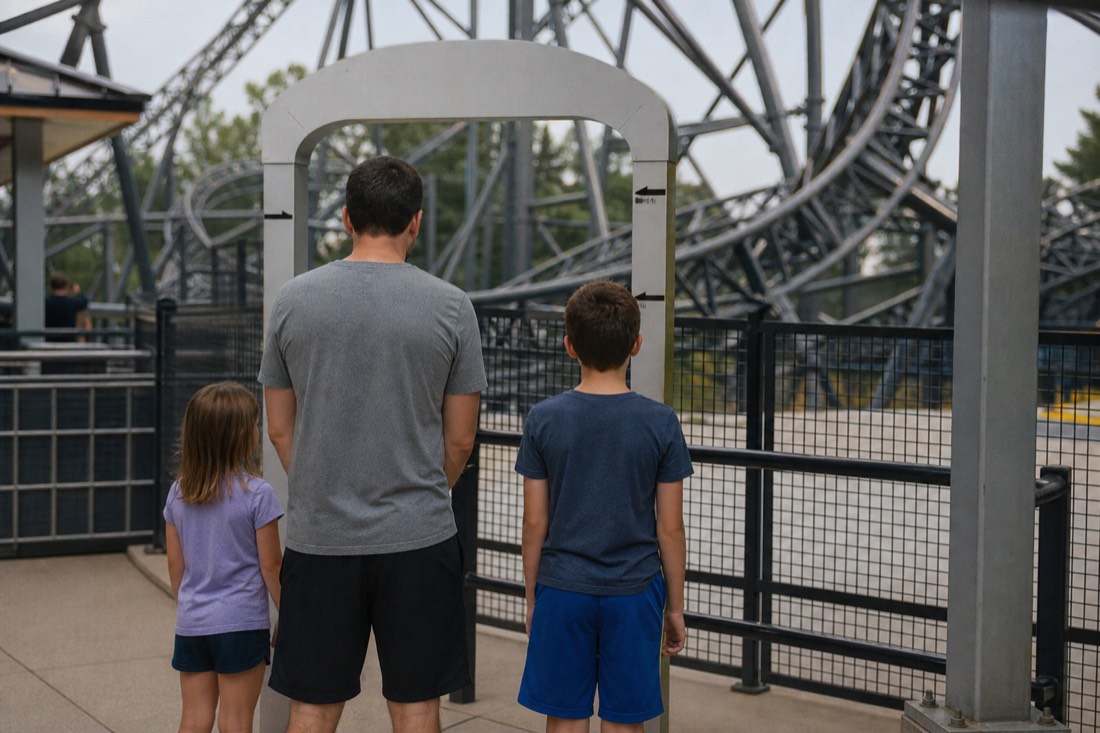
The saddest sight in this park is a 123-centimeter kid at the Takabisha entrance arch, two centimeters short of the line. I watch the measurement moment most weeks, and I have learned to ask families for heights before I ever plan their day. Do the same and this page is your measuring stick.
Check the operator’s rules first; choosing a ticket comes after confirming the rides your party can use.
What are the exact height restrictions at Fuji-Q Highland?
Per the official attraction rules: Fujiyama admits riders from 110 cm with an attendant required under 130 cm; Takabisha requires 125 cm minimum; Eejanaika takes riders between 125 and 200 cm; ZOKKON takes 120 to 195 cm. The upper limits are real and enforced, which surprises very tall visitors more often than short ones.
| Coaster | Min height | Max height | Age cap | Attendant rule |
|---|---|---|---|---|
| Fujiyama | 110 cm | none listed | ~64 | Required for riders 110-130 cm |
| Takabisha | 125 cm | none listed | ~54 | Standard child rules |
| Eejanaika | 125 cm | 200 cm | ~54 | Standard child rules |
| ZOKKON | 120 cm | 195 cm | ~64 | Standard child rules |
Two things in that table ambush foreign visitors. The 200 cm ceiling on Eejanaika genuinely excludes very tall riders, because the rotating seats need clearance; I have watched a 202 cm Dutch guest take the news like a weather report, then have a great day on Fujiyama. And the age caps, roughly 54 on the two intense machines and 64 on the other pair, are checked when staff have reason to ask. They exist for the same medical reasons as the health rules below.
How scary are Fuji-Q Highland rides, honestly?
On my five-point scale from watching thousands of first-timers: ZOKKON is a 2, a fast playful launch anyone who likes rides will enjoy. Fujiyama is a 3, big speed and drops with no inversions. Takabisha is a 4, one genuinely dreadful hanging moment then a normal coaster. Eejanaika is a 5, relentless disorientation that some riders adore and some ride exactly once.
The useful detail is what each machine actually does to you:
| Ride | The scary part | The secretly fine part | First-timer advice |
|---|---|---|---|
| ZOKKON | Backward launch surprise | Smooth, low, short | Ride it first as a warm-up |
| Fujiyama | 79 m lift hill view | Classic forces, no flips | Front row for the Mt. Fuji panorama |
| Takabisha | The 121° hold-and-drop | Everything after the drop | Do not watch the drop before riding |
| Eejanaika | Seats rotate mid-inversion | It ends in about two minutes | Empty pockets completely, commit |
The full ride rankings go deeper on each machine, and the world-context piece, where two of these place among the scariest coasters on the planet, calibrates the scale for coaster veterans. Families calibrating downward instead should read the Thomas Land guide: its 12 rides carry gentle or no height rules and an entirely different definition of thrilling.
What health restrictions apply on the big coasters?
The standard exclusions apply to all four: pregnancy, recent surgery, and heart, spine, back or neck conditions bar riding. Riders with high blood pressure or motion-sensitivity should skip Eejanaika specifically. Loose items, including phones, glasses without straps and open-top bags, are locker-bound before boarding the intense pair.
Read your own situation down the left column:
| Condition | Big four | Note |
|---|---|---|
| Pregnancy | Barred on all four | Standard exclusion |
| Recent surgery | Barred on all four | Standard exclusion |
| Heart, spine, back or neck condition | Barred on all four | Standard exclusion |
| High blood pressure | Skip Eejanaika specifically | Check every attraction’s current health restrictions |
| Motion-sensitivity | Skip Eejanaika specifically | Its relentless rotation is the reason |
| Loose items (phone, unstrapped glasses, open-top bag) | Locker before boarding the intense pair | An item rule, not a health bar |
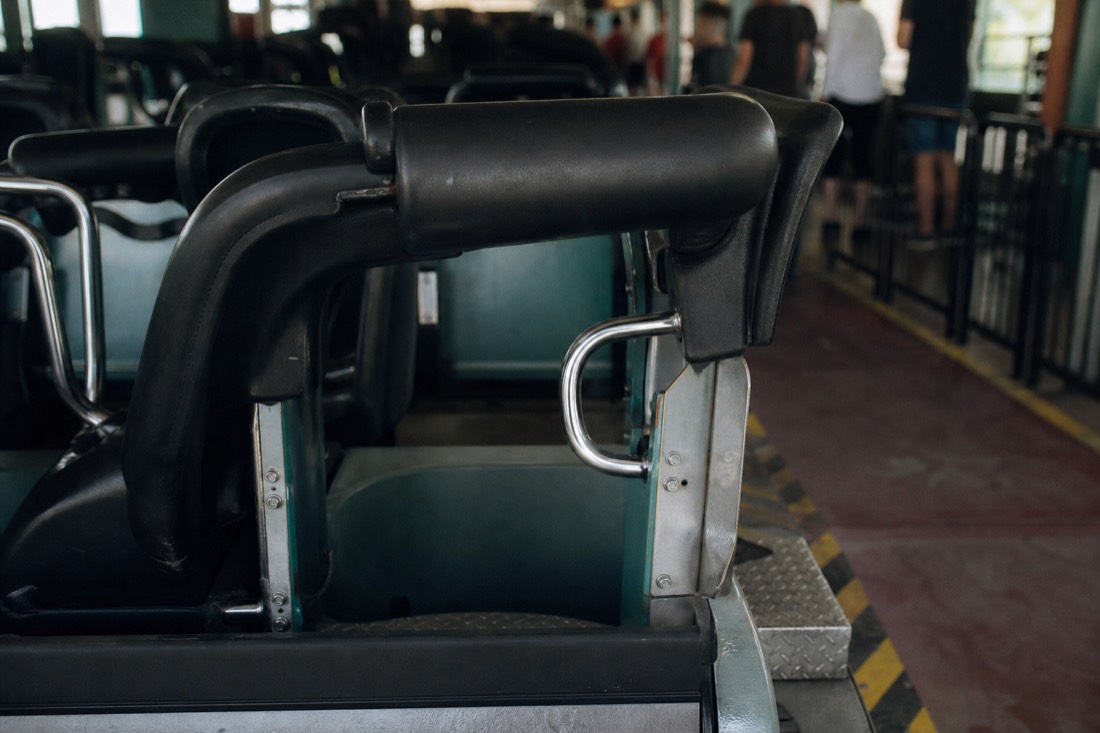
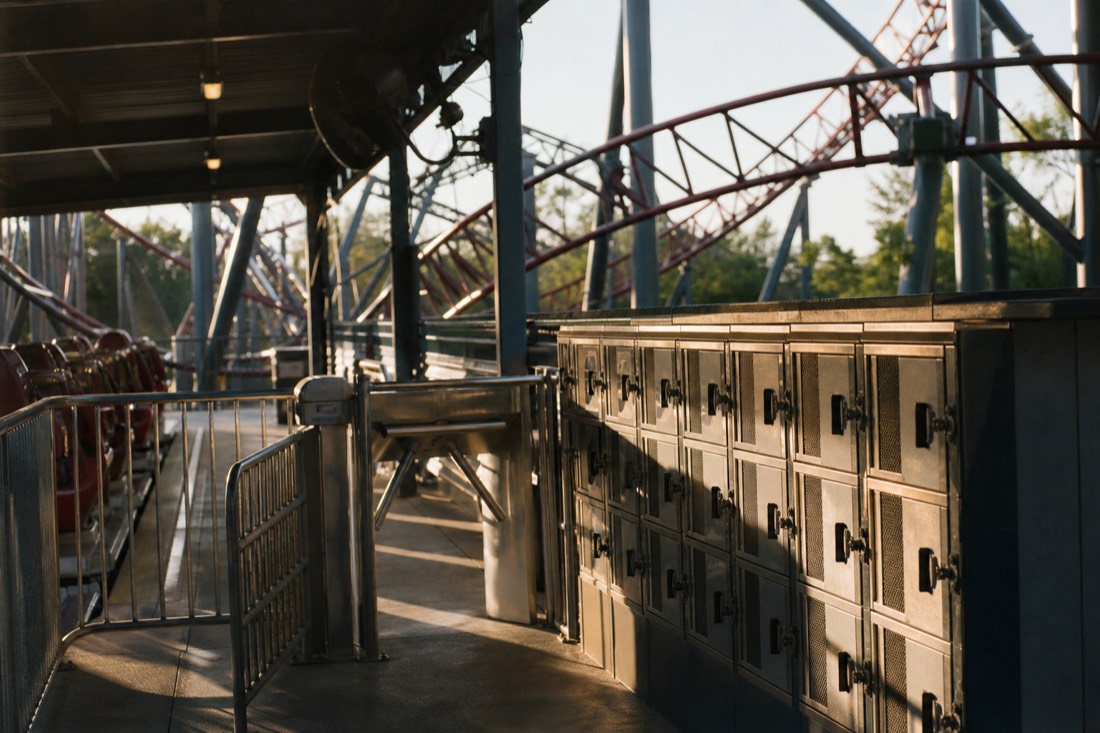
The park's per-ride usage pages list the specific criteria, and the boarding staff apply them without negotiation, politely and absolutely. A few practical notes from the boarding lines: Eejanaika's shoulder restraints fit broad-chested riders tightly, and staff will re-check rather than force a close fit; Takabisha and Eejanaika require everything out of pockets into free queue-side lockers; and glasses-wearers should bring a strap or accept riding blurry, because staff will ask.
Can a mixed-height family still plan a full day?
Yes, and the trick is splitting by rule tier rather than by ride list: one adult rotates through the big four while the other holds the 110-125 cm zone (Fujiyama with attendant, ZOKKON from 120 cm, most mid-tier rides), then swap. Thomas Land and the NARUTO area fill the under-110 gaps, and everyone reunites for the observation deck.
Ticket-wise this is the family case from the price guide all over again: full unlimited passes for the tall half of the family, Thomas Land Pass or per-ride tickets for the small half. The one-day pass listing on Klook carries kid and senior rates on the same checkout, which keeps the mixed booking in one place, in English.
Which rides can each height tier actually ride?
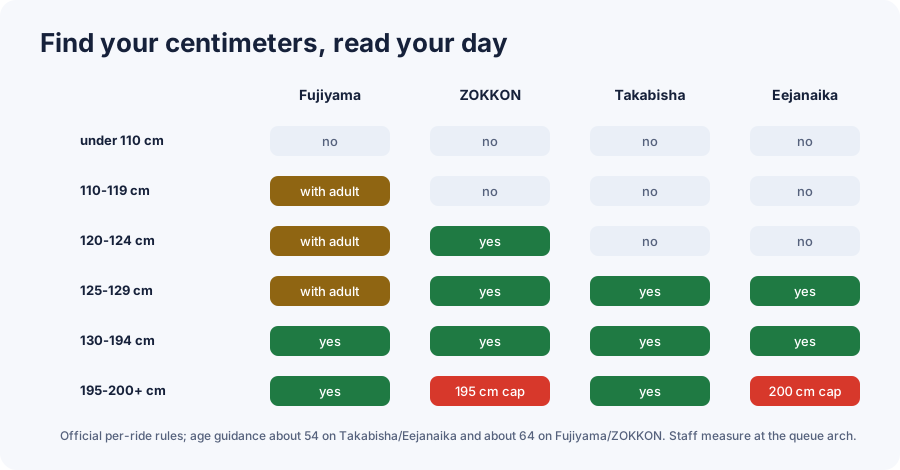
Read your child's centimeters against the big four's minimums: nobody boards a headline coaster under 110 cm, Fujiyama opens at 110 cm with an adult, ZOKKON at 120 cm, and all four unlock at 125 cm. The very tall lose ZOKKON above 195 cm and Eejanaika above 200 cm. Everything below 110 cm is Thomas Land and the NARUTO village.
The gates are not evenly spaced, which is the part that trips people. Between 110 and 125 cm a child gains coasters one at a time: Fujiyama first, ZOKKON at 120, then the full set at 125. I plan mixed-height groups around whichever child sits lowest on that ladder, because that number decides how often the group has to split. Very tall visitors have the opposite problem, and it is a real one. The rotating seats on Eejanaika and the motorbike straddle on ZOKKON both run out of room, so a rider who clears every minimum can still be blocked by a maximum.
| Height tier | Big four they can board | Attendant rule | Where else the day goes |
|---|---|---|---|
| Under 110 cm | None of the big four | Junior-high-age or older companion with the smallest Thomas riders | Thomas Land's 12 rides, NARUTO village |
| 110-119 cm | Fujiyama only | Adult attendant required on Fujiyama under 130 cm | Most mid-tier rides, Thomas Land, NARUTO village |
| 120-124 cm | Fujiyama and ZOKKON | Adult attendant still required on Fujiyama under 130 cm | ZOKKON becomes the family headline coaster |
| 125 cm and up | All four | Fujiyama attendant only while still under 130 cm | The whole park is open |
| Over 195-200 cm | Fujiyama and Takabisha only | None | ZOKKON caps at 195 cm, Eejanaika at 200 cm |
What should families check before they arrive?
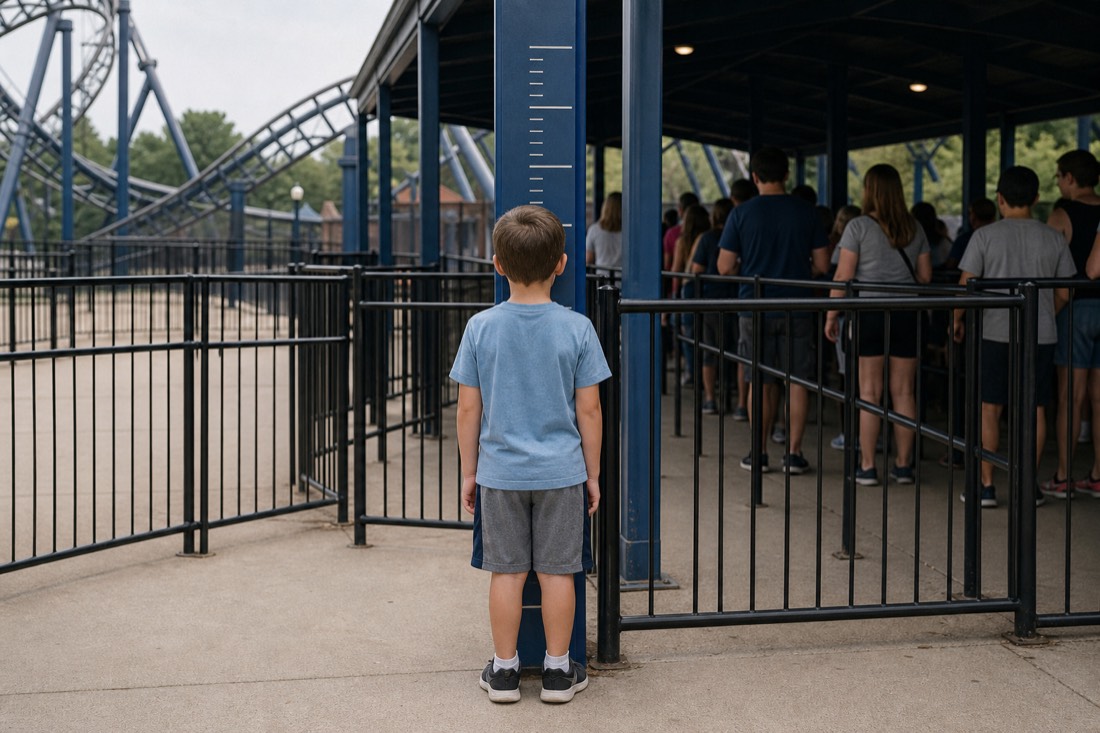
Measure your child in the shoes they will wear, since staff measure with shoes on at the arch. If they land within two centimeters of 110, 120 or 125, plan the day as though they miss the higher tier and treat clearing it as a bonus. Line up an adult for any Fujiyama rider under 130 cm.
Two things matter more than any ticket here: a measured height, and a plan for who supervises whom. I ask families for the child's height in centimeters before I sketch a route, because a borderline reading changes the whole day. The park measures at the arch with shoes on and does not round up, so measure them the way they will be measured. My two-centimeter buffer is a personal habit, not a park rule, and it has saved more family mornings than any priority pass ever has.
| What to check | Why it matters | Kenji's move |
|---|---|---|
| Measured height, shoes on | Decides which tier of coasters opens | Note it on your phone before you leave the hotel |
| Borderline within ~2 cm of a line | The arch is exact and not negotiable | Plan for the lower tier, cheer if they clear it |
| Adult for under-130 cm Fujiyama riders | Fujiyama requires an attendant under 130 cm | Pair each small rider with a named grown-up |
| Health flags: heart, back, neck, pregnancy | These bar all four regardless of height | Settle who sits out before the queue starts |
| Thomas Land companion age | Smallest Thomas riders need a junior-high-age or older rider along | Assign the teen or adult who rides with them |
The height-rule mistakes Kenji sees families make
Three mistakes cost families ride time every week: relying on an imprecise home measurement instead of the operator’s measurement; assuming one height clears everything, when 110, 120 and 125 cm are three separate gates; and forgetting the upper limits exist, so a very tall rider is stunned to be turned away from ZOKKON at 195 cm.
None of these come from carelessness. They come from treating a theme park like it has one rule when it has a small stack of them, counted in centimeters and years. The fix is boring and it works: measure once, in shoes, write it down, and match every person in the group to the tier their number actually buys. Do that at breakfast and the queue turns into the fun part instead of the argument.
| Mistake | What it costs | Kenji's fix |
|---|---|---|
| Measuring in socks at home | A borderline home measurement may differ from the operator’s check | Measure carefully and follow the operator’s rules; do not try to add height |
| Treating the big four as one rule | The family queues Takabisha with a 122 cm child who can only ride ZOKKON | Learn the three gates: 110, 120, 125 cm |
| Ignoring the upper limits | A very tall guest reaches the ZOKKON gate and stops at the 195 cm cap | Route them to Fujiyama and Takabisha, which list no ceiling |
| Skipping the age question | Grandparents assume Eejanaika, then meet the roughly-54 cap | Check the age caps, about 54 on the intense pair, the night before |
| Splitting the family too late | No adult free to attend a sub-130 cm Fujiyama rider | Assign attendants at breakfast, not in the queue |
Rules FAQ
Are height checks strict at Fuji-Q?
Completely. Staff measure at the queue entrance against a fixed arch, and centimeters are not negotiable, with shoes on as measured. If a child is borderline, measure at home first and set expectations before the queue, not in it.
Can adults over 54 really not ride Takabisha?
Treat the published age limit as binding. Being fit does not override an attraction’s age or health restrictions; staff apply the operator’s current rules.
Is there a rider-switch service for parents?
Yes in practice: staff accommodate alternating parents so one queues while one supervises, then swap without a second full wait on most big rides. Ask at the ride entrance, since implementation varies by attraction and crowd level.
Do the height rules differ for the Haunted Hospital?
It is a walking attraction, so there is no height bar; the constraint is nerve and age suitability, generally recommended for elementary age and up. It is genuinely frightening, which is its entire business model.
Your Next Step
Plan Only After Checking Ride Eligibility
General guidance; use the optional controls to match your plans.
Fuji-Q One-Day Ride Pass
Have your travel date in mind? Cover a full coaster day with unlimited standard rides. Check the date before arranging the rest of your day.
One-day ticket; meet at Fuji-Q. Transport, ride priority and special paid attractions are extra. Check voucher delivery and validity before paying.
Choose a date to check Viator’s schedule. Availability and final price are confirmed on Viator.
Compare Options & Match Your Plans
Compare Your Two Quoted Totals
Enter totals for the same party in one currency, including any compulsory extras. These are your figures, not live prices.
Affiliate links: we may earn a commission from qualifying bookings with Viator, GetYourGuide or Klook, at no extra cost to you.