The coasters
Fuji-Q Highland Rides & Attractions Ranked: The Big Four and What Happened to Do-Dodonpa
Two world records, one retired legend, and a motorbike launch coaster. This is the lineup people cross oceans for, ranked by someone who queues in it weekly.
 Written with Kenji Yamamoto, Fuji-Q Highland ticket specialist
Short answer
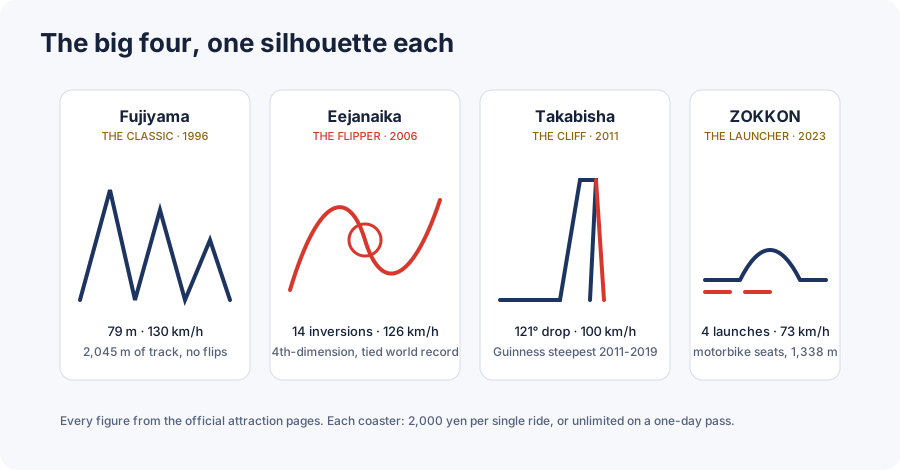
Fuji-Q Highland's big four are Eejanaika (4D coaster, 14 inversions, a tied world record), Takabisha (121-degree drop, the Guinness steepest-coaster record 2011-2019), Fujiyama (79 m, 130 km/h, the 1996 King of Coasters) and ZOKKON (2023 motorbike launch coaster). Do-Dodonpa, the 0-180 km/h in 1.56 s accelerator, was retired permanently in March 2024. Each costs ¥2,000 per ride, or ride them all unlimited on a one-day pass.
Choose a full ride day, a shorter visit, or free entry. Ride operation and eligibility remain separate checks.
Ask me at the park which coaster to ride first and I will answer before you finish the question: Eejanaika, because its queue grows faster than any other, and because no other machine on earth quite does what it does to your inner ear. Then we can argue about the rest of the ranking.
The ticket comparison separates standard ride coverage from special attractions and queue upgrades.
What are the big four coasters at Fuji-Q Highland?
Four headline machines define the park: Fujiyama (1996, 79 m tall, 130 km/h, 2,045 m long), Eejanaika (2006, a 4th-dimension coaster with rotating seats and 14 inversions), Takabisha (2011, a 121-degree beyond-vertical drop) and ZOKKON (2023, an LSM launch motorbike coaster with four launches). All four charge ¥2,000 per single ride.
Part of what draws crowds is the record book, and it splits into records still standing and records the park has lost:
| Coaster | Record | Status |
|---|---|---|
| Eejanaika | 14 inversions, tied world record for a 4D coaster | Current |
| Takabisha | 121-degree drop, Guinness steepest steel coaster | Held 2011-2019, lost 2019 |
| Fujiyama | Four world records at its 1996 opening | Historic, from the opening era |
| Do-Dodonpa | 0-180 km/h launch, fastest on any coaster | Retired March 2024 |
The stats deserve a table, because this park's numbers are the whole argument:
| Coaster | Opened | The claim | Speed | Height rule | Age cap |
|---|---|---|---|---|---|
| Fujiyama | 1996 | "King of Coasters", 4 world records at opening | 130 km/h | 110 cm+ (attendant under 130 cm) | ~64 |
| Eejanaika | 2006 | 14 inversions, tied world record for a 4D coaster | 126 km/h | 125-200 cm | ~54 |
| Takabisha | 2011 | 121° drop, Guinness steepest 2011-2019 | 100 km/h | 125 cm+ | ~54 |
| ZOKKON | 2023 | 4 launches incl. backward, 12 airtime moments | 73 km/h | 120-195 cm | ~64 |
Sources for every figure are the park's own attraction pages and the coaster databases; the exact rules per ride live in my height and restrictions guide.
How do the Fuji-Q rides actually rank?
My ranking after hundreds of guest days: 1) Eejanaika for sheer disorientation, 2) Takabisha for the single best moment in the park (the hang before the 121-degree drop), 3) Fujiyama for old-school speed and the Mt. Fuji view from the lift hill, 4) ZOKKON for families and launch fans. Re-ride whichever one you screamed loudest on.
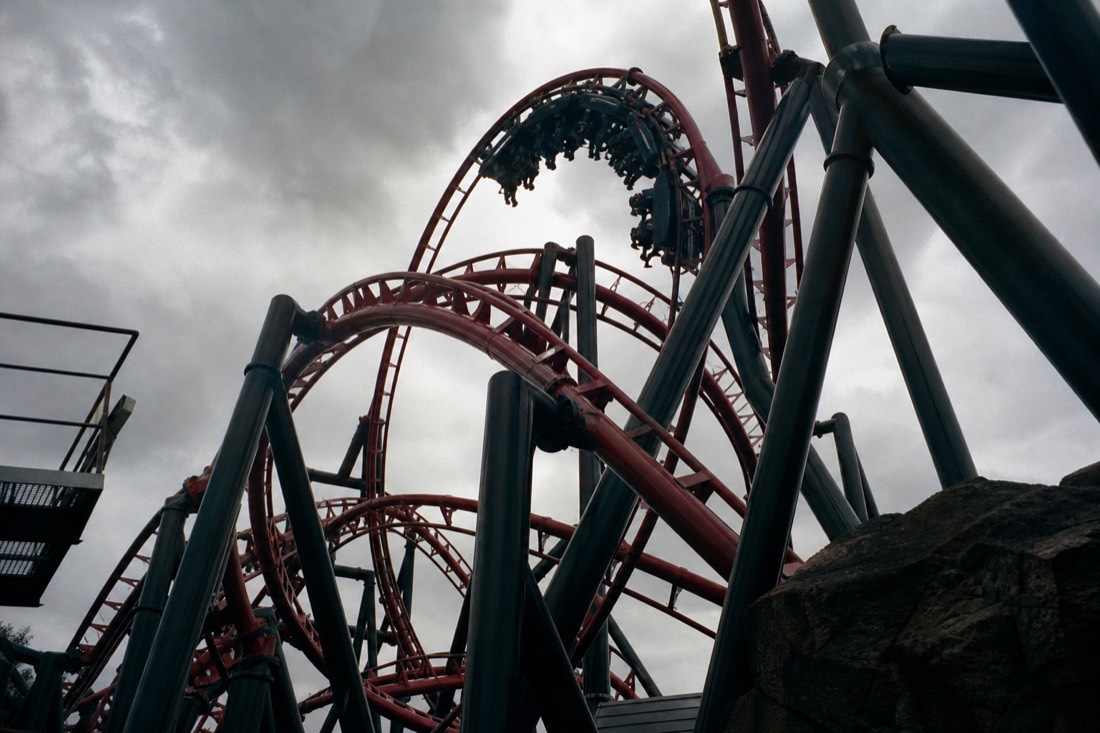
Eejanaika needs explaining. It is a 4th-dimension coaster, one of very few ever built: your seat rotates head-over-heels independently of the track, so of its 14 counted inversions, 11 are your own seat flipping. Riders come off it grinning and walking diagonally. People who love it really love it; my advice stands, ride it first, at opening, before the queue triples.
Takabisha's drop is a psychology trick as much as engineering. The lift stops you at the top, holds you facing down past vertical for a breath, then lets go. Guinness certified it the world's steepest steel coaster in July 2011, a record it held until 2019, and the park still prints the 121-degree figure on everything because no moment in Japan matches it.
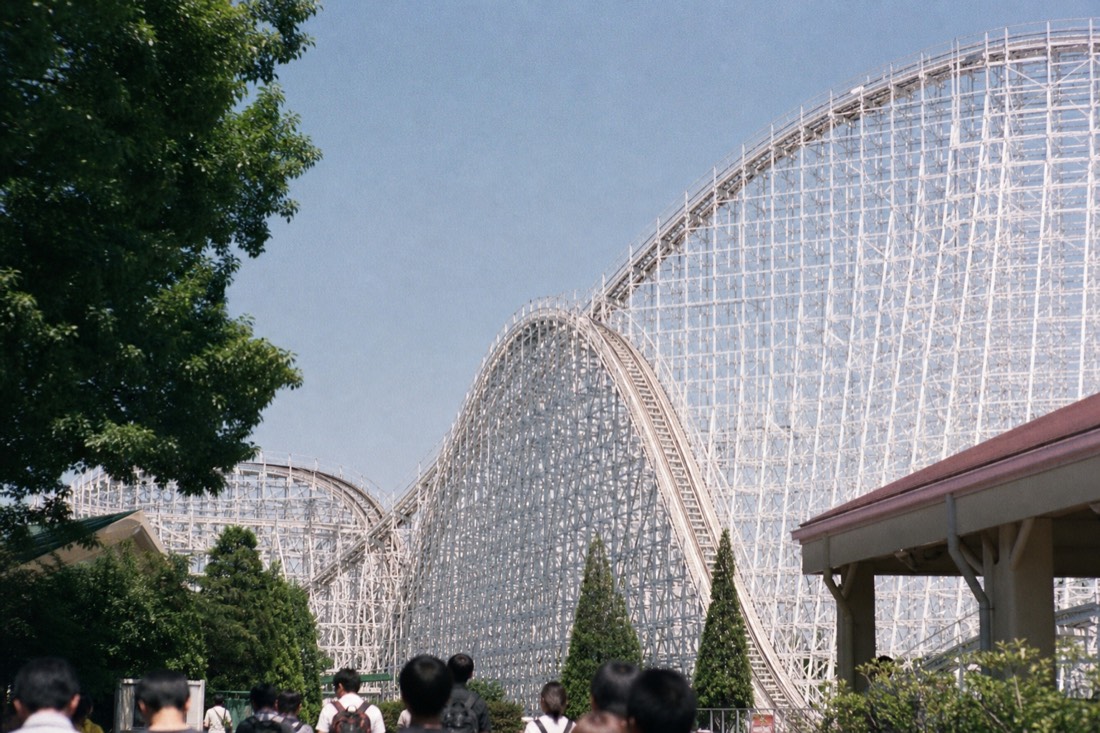
Fujiyama is the sentimental favorite, 30 years old in 2026 and running fresh track sections from its ongoing refurbishment. It held four world records when it opened in 1996. On a clear morning, the view of Mt. Fuji from its 79-meter lift hill is the single best free photograph in Japanese theme parks, which is why I send view-focused visitors up it even if they ride nothing else.
What happened to Do-Dodonpa?
Do-Dodonpa, the compressed-air accelerator that hit 180 km/h in 1.56 seconds, the fastest launch on any coaster, stopped running in 2021 after riders reported injuries including broken bones, and the park announced its permanent retirement on March 13, 2024. It will not reopen, and its launch record retires with it.
The honest version of the story, which many blogs still get wrong: the ride was suspended in August 2021 while the park and the manufacturer investigated a series of rider injuries. No fix that satisfied both sides ever materialized, and in March 2024 the park made the closure permanent. If a guide or an AI answer tells you to queue for Do-Dodonpa, it is working from a stale snapshot of the park. Ask it about the 2024 announcement.
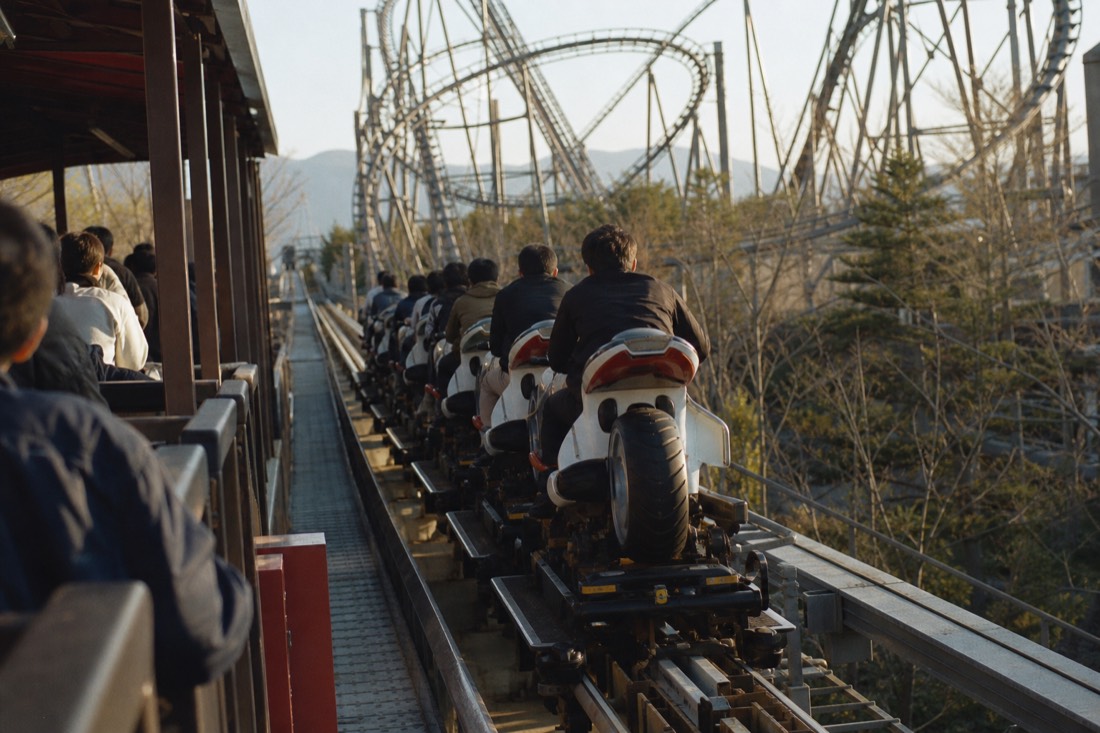
What fills the gap? ZOKKON, practically speaking. It opened in July 2023 as an Intamin LSM motorbike coaster: you straddle a bike-style seat through four launches, one of them backward, across 1,338 meters of track with a dozen airtime pops. It is not a record machine and does not try to be; it is the park's most re-ridable coaster and the one ride all four generations of a family group can share, if everyone clears 120 cm.
Which non-coaster attractions are actually worth queueing for?
Three: the Haunted Hospital (a 50-minute walking horror maze priced per group, ¥4,000 with a pass), the NARUTO x BORUTO Hidden Leaf Village area (free to enter with park admission), and Thomas Land if you have children under about eight. Everything else is pleasant filler between coaster queues.
| Attraction | Type | Cost | Who it's for |
|---|---|---|---|
| Haunted Hospital | Walking horror maze | ¥4,000/group with pass, ¥8,000 without | Groups of 2-4 who like being terrified |
| NARUTO x BORUTO village | Themed area, photo spots, experiences | Area entry free with admission | Anime fans, families |
| Thomas Land | 12 child-scale rides | ¥400-500/ride or own pass ¥3,000-3,500 | Kids under ~8 |
| FUJIYAMA tower deck | Observation deck | Separate ticket | Mt. Fuji photographers |
The Haunted Hospital deserves its own briefing before you commit a group fee to it, and the Thomas Land and NARUTO write-up settles the family ticket math. For where these all sit in a one-day route, my day plan on the homepage runs the efficient order, and if you want the four coasters ranked against the world's scariest, the global ranking on the blog places two of them in uncomfortable company.
Booking note for coaster completers: unlimited re-rides are what make the pass sing, and the one-day pass on Klook covers all four machines in this guide with kids' and seniors' rates on the same listing.
How do the big four compare on intensity and re-ride value?
None of the big four is mild, but they escalate. ZOKKON is the family-friendly launch coaster you re-ride most, Fujiyama trades inversions for raw 130 km/h speed, Takabisha delivers one savage 121-degree drop, and Eejanaika flips you until you forget which way is up. Re-ride value peaks where re-rides feel different.
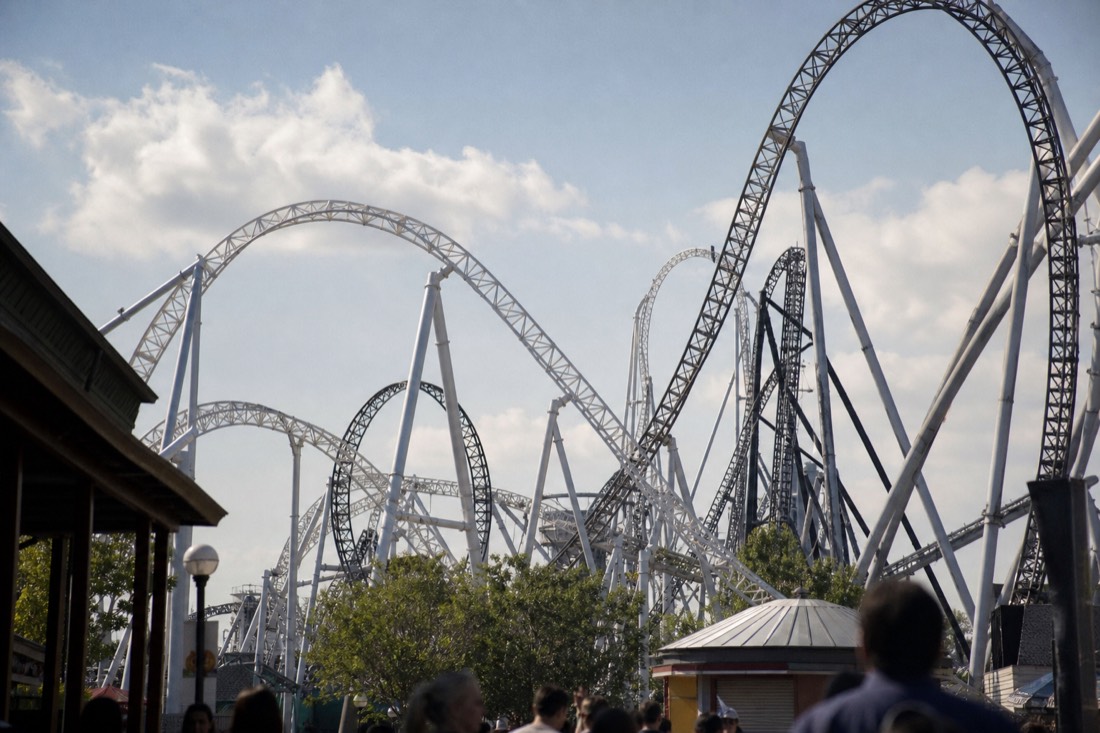
Intensity and re-ride value do not always move together. Eejanaika sits at the top of the intensity ladder and near the top for thrill-chasers, yet plenty of guests ride it once, walk away shaken, and never queue again. ZOKKON is the mirror image: lower on raw intensity, highest on the number of times a group actually re-rides it in a day. That gap is the whole point of an unlimited pass. You pay once and let each coaster prove its re-ride case on your own nerves.
Fujiyama and Takabisha split the middle. Fujiyama earns repeats on speed and that lift-hill view of Mt. Fuji rather than on fear, while Takabisha is built around a single moment you either want again or never want to see again.
| Coaster | Intensity | Re-ride pull | Why I rank it here |
|---|---|---|---|
| Eejanaika | Relentless, never stops flipping | High if you love disorientation | 14 inversions with an independently rotating seat |
| Takabisha | One extreme moment, calm around it | Moderate, the drop is the payoff | The 121-degree hang is the single best beat in the park |
| Fujiyama | Fast and open, no inversions | High, the Mt. Fuji view rewards repeats | 130 km/h and a 79 m lift-hill view |
| ZOKKON | Approachable thrill, launch fun | Highest, the park's most re-ridable | Four launches, one backward, the whole family can share it |
What is the smartest ride order to beat the queues?
Ride Eejanaika at the gate because its queue triples fastest, chain Takabisha and ZOKKON while the park is still filling, then hold wind-sensitive Fujiyama for late morning. Eat at 11:45 before the lunch crush, and spend the last operating hour re-riding whatever thrilled you, since queues shrink again at closing.
Queues here breathe on a predictable rhythm, and the bottleneck is almost always the first two hours versus everything after. Gate-open to 10:00 runs the shortest standard lines of the day, so the rides you care about most belong in that window. Eejanaika is the pressure point: its morning queue grows faster than any other coaster in the park, which is why it goes first in every plan I hand a guest.
Fujiyama is the wildcard. It is the most weather-sensitive machine here, and wind or morning rain can idle it while the other three keep running, so I never make it a first ride. Slot it once the air settles, keep lunch early at 11:45 to ride through the food rush, and treat the last operating hour as free re-ride time when the crowds thin toward closing.
| Time window | My move | The queue logic |
|---|---|---|
| Gate open to 10:00 | Eejanaika first, then Takabisha | Shortest standard queues of the day, and Eejanaika's line grows fastest |
| Late morning | ZOKKON, then Fujiyama once the wind settles | Fujiyama is the park's most weather-sensitive machine, so ride it once, not first |
| 11:45 to 13:00 | Eat, then walk on to whatever reads short | Lunch thins the coaster lines while everyone else queues for food |
| Mid-afternoon | Non-coaster attractions or a Mt. Fuji photo | Coaster queues peak now, so spend the crowd on things that have no line |
| Last operating hour | Re-ride your favorite | Lines shrink again as the park empties toward closing |
Which rides does Kenji tell first-timers to skip?
I rarely tell anyone to skip a coaster outright, but I do triage. First-timers should skip Do-Dodonpa entirely, it retired in March 2024 and will not reopen, and I steer nervous riders past Eejanaika until last. Everyone with the time should ride Fujiyama, even if they board nothing else.
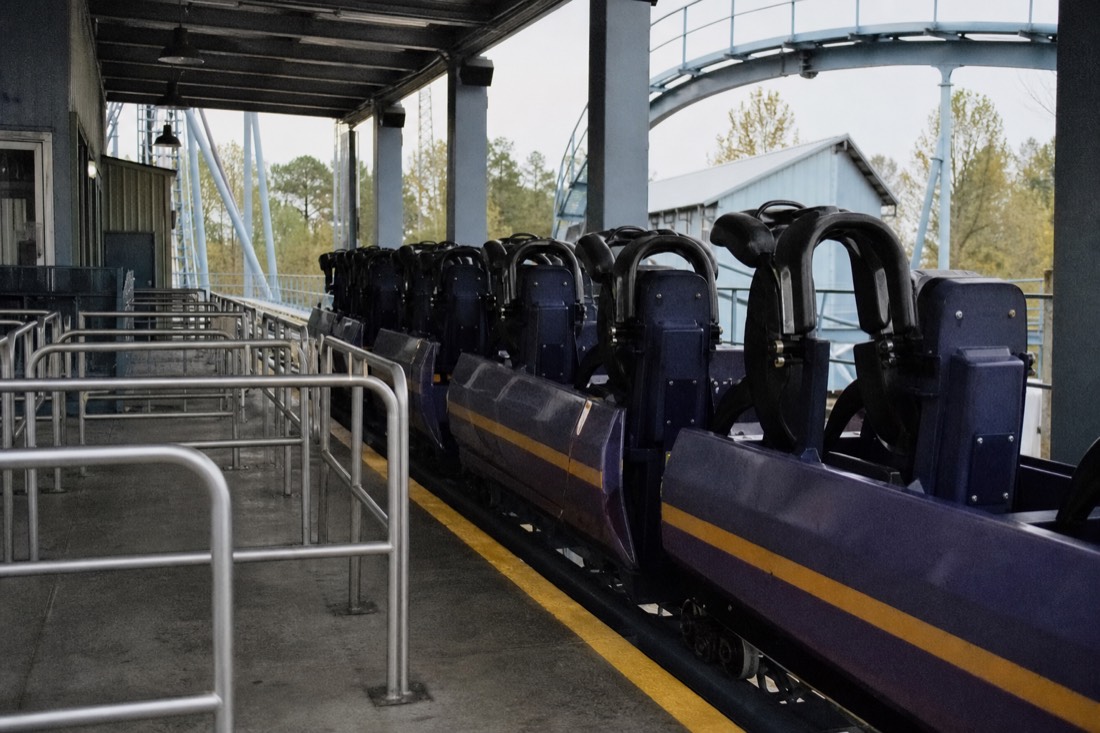
Skip is a strong word, and for a live coaster I use it sparingly. Do-Dodonpa is the exception that is not really a judgment call: it retired permanently in March 2024, so any plan built around it is built around a ride that no longer exists. Delete it and move on.
The rest is sequencing, not skipping. I do not tell nervous first-timers to avoid Eejanaika, I tell them to earn it, because starting your coaster day on the park's most disorienting machine tends to end it too. Fujiyama is the opposite advice: its 110 cm rule is the friendliest of the big four, it has no inversions, and even guests who ride nothing else should take it up the lift hill for the view.
| Ride | My verdict for first-timers | Why |
|---|---|---|
| Do-Dodonpa | Skip, it is gone | Retired permanently in March 2024, no longer operating |
| Eejanaika | Ride, but save it until you warm up | The relentless flipping overwhelms nervous first-timers who start here |
| Fujiyama | Ride, even view-only visitors | Beginner-friendly 110 cm rule, no inversions, best free Mt. Fuji photo |
| Takabisha | Ride if you can stomach one big drop | The fear is brief, one 121-degree plunge and it is over |
| ZOKKON | Ride first if you are easing in | Most approachable of the four, and the whole group can share it |
Ride FAQ
Is Eejanaika scarier than Takabisha?
Most riders say yes: Takabisha is one terrifying moment surrounded by a normal coaster, while Eejanaika never stops flipping you. If you can only stomach one, Takabisha's fear is briefer; if you want the full Fuji-Q story, Eejanaika is the park.
Can beginners ride Fujiyama?
Yes, and it is the right first big coaster here: no inversions, huge speed, open views. The 110 cm height rule is the park's most permissive among the big four, and riders under 130 cm need an accompanying adult.
Do the coasters close in winter?
The park runs year-round, but individual coasters pause for weather, and cold snaps with wind hit Fujiyama first. Check the monthly operating calendar for your date before committing trains and tickets.
Is ZOKKON worth the queue for coaster veterans?
As a launch collector's piece, yes: four LSM launches including a backward one is an unusual layout. As a thrill benchmark it sits a tier below the other three, which is exactly why families love it.
Your Next Step
Build A Ride Day Around Your Priorities
General guidance; use the optional controls to match your plans.
Fuji-Q One-Day Ride Pass
Have your travel date in mind? Cover a full coaster day with unlimited standard rides. Check the date before arranging the rest of your day.
One-day ticket; meet at Fuji-Q. Transport, ride priority and special paid attractions are extra. Check voucher delivery and validity before paying.
Choose a date to check Viator’s schedule. Availability and final price are confirmed on Viator.
Compare Options & Match Your Plans
Compare Your Two Quoted Totals
Enter totals for the same party in one currency, including any compulsory extras. These are your figures, not live prices.
Affiliate links: we may earn a commission from qualifying bookings with Viator, GetYourGuide or Klook, at no extra cost to you.