Experience Japan’s Most Exciting Amusement Park with Epic Roller Coasters

Buy Fuji-Q Highland Tickets

(Non-Japanese Citizens)

Book the best Fuji-Q Highland tickets near Mount Fuji. Enjoy world-class roller coasters like Fujiyama, Eejanaika, Dodonpa and Takabisha, visit Thomas Land, experience haunted houses and get stunning views of Mount Fuji. Fast-track passes, combo tickets and seasonal events available. Secure your unforgettable Fuji-Q Highland adventure today!

4.9 READ MORE

Best Selling Fuji-Q Highland Tickets

Our best-selling Fuji-Q Highland tickets give you full access to Japan’s thrilling amusement park at the base of Mount Fuji.

Powered by GetYourGuide


Why Fuji-Q Highland is a Must-Visit Destination

Located at the base of Mount Fuji, Fuji-Q Highland is one of Japan’s most exciting and thrilling amusement parks. Famous for its world-class roller coasters that regularly rank among the most intense on the planet, the park offers an incredible mix of adrenaline-pumping rides, beautiful views of Mount Fuji, and fun attractions for all ages. From record-breaking coasters to the popular Detective Conan-themed areas, it’s a must-visit for thrill-seekers and theme park lovers. With Fuji-Q Highland Tickets, you’ll get fast and easy access to Japan’s thrill capital with the option to add express passes to skip the lines on the biggest rides.

Extreme Roller Coasters

Experience some of the world’s most intense rides including Fujiyama, Eejanaika, Takabisha (world’s steepest drop), and Dodonpa — pure adrenaline with Mount Fuji often watching in the background.

Mount Fuji Views

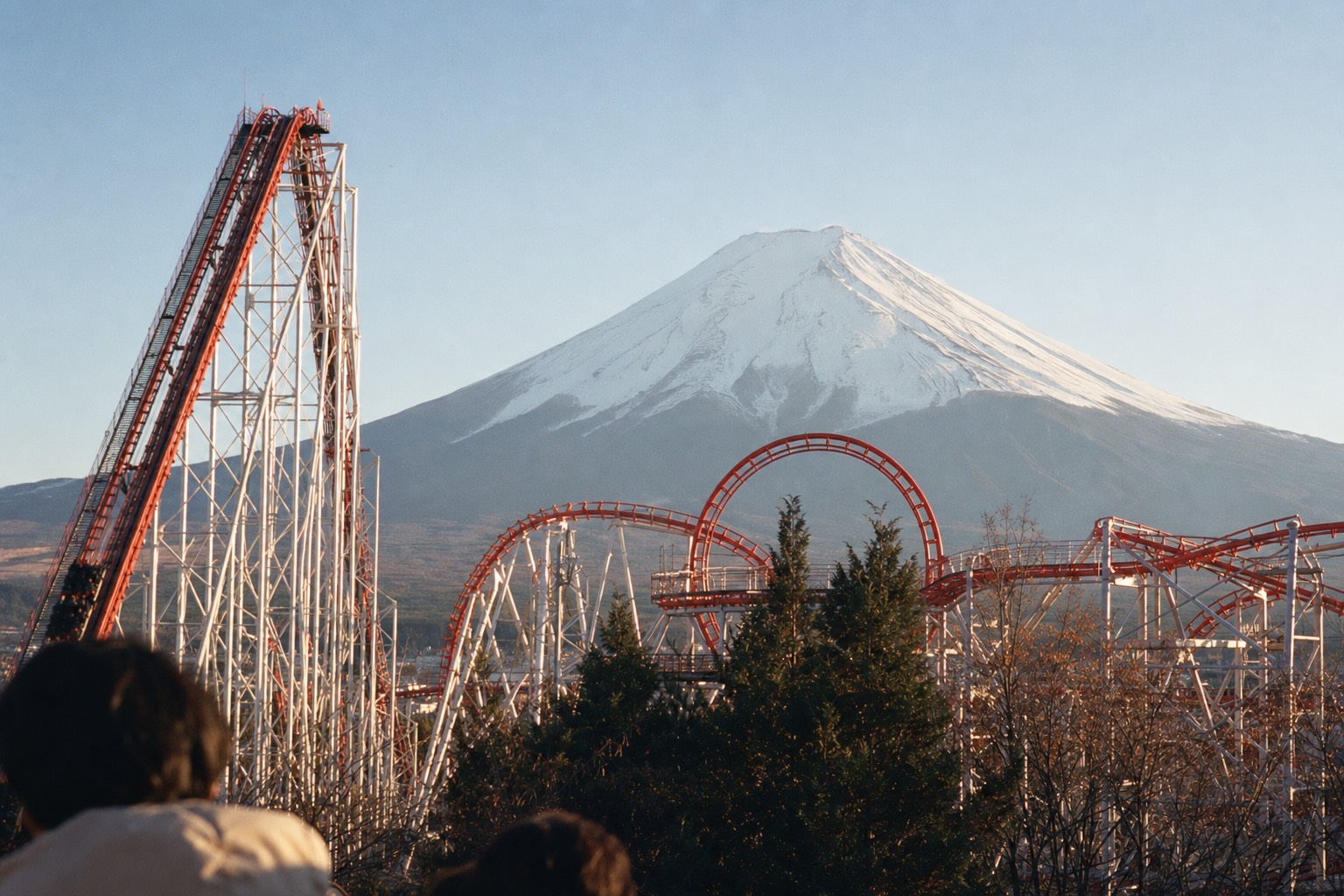
Enjoy stunning panoramic views of Japan’s iconic mountain from many areas of the park, especially beautiful in clear weather or during cherry blossom and autumn seasons.

Detective Conan & Themed Attractions

Step into the popular Detective Conan (Case Closed) world with immersive rides, mystery mazes, and themed areas loved by fans of all ages.

Family & Fun Zones

Ride gentler attractions, enjoy the Ferris wheel, haunted houses, and seasonal events — making Fuji-Q Highland a great day out for families and friends.

Meet the Team of Fuji-Q Highland Tickets

team of Fuji-Q Highland Tickets

Our expert team has been helping navigate and book Fuji-Q Highland tickets and experiences for tourists from all over the world for over a decade, ensuring you have a hassle-free trip with everything booked in advance.

With deep knowledge of Fuji-Q Highland’s world-class roller coasters, thrilling attractions, and its unique location at the base of Mount Fuji, partnerships with official ticket providers, and a passion for creating unforgettable experiences, we're committed to making your Fuji-Q Highland adventure truly extraordinary. From your first inquiry to your last ride, we're here to support you every step of the way.

Award-Winning Travel Experience

Fuji-Q Highland Tickets is recognized by leading travel platforms worldwide

Japan Fuji-Q Excellence Award

2024

Fuji-Q Explorer Choice Award

2024

Best Fuji-Q Highland Ticket Operator

2023

Yamanashi Entertainment Tourism Award

2024

Mount Fuji Theme Park Heritage Verified Excellence

2025

The most convenient ways to get to Fuji-Q Highland from Tokyo are by train or direct bus.

Best Options:

  • Train (Recommended for most visitors): Take the JR Chuo Line from Shinjuku or Tokyo Station to Otsuki Station (about 1 hour). Then transfer to the Fuji Kyuko Line to Fujisan Station or directly to Fuji-Q Highland Station (about 50 minutes). Total travel time: 1.5 – 2 hours. Very scenic and reliable.
  • Highway Bus (Easiest door-to-door): Direct buses from Shinjuku Expressway Bus Terminal or Tokyo Station to Fuji-Q Highland. Travel time: 1.5 – 2 hours. Some buses drop you right at the park entrance.
  • By Car: About 1.5 – 2 hours via the Chuo Expressway. Good if you want flexibility, but parking can be busy on weekends.

The train via Otsuki or a direct highway bus from Shinjuku is the best choice for most people. Both are straightforward, scenic, and avoid driving stress.

You can book Fuji-Q Highland tickets and packages (including transportation options from Tokyo) at https://fujiqhighlandtickets.com/.

The journey from Tokyo (mainly Shinjuku) to Fuji-Q Highland takes approximately 1 hour 40 minutes to 2 hours.

Breakdown:

  • Highway Bus (most popular & convenient): 1 hour 40 minutes – 2 hours Direct buses from Shinjuku Expressway Bus Terminal are frequent and comfortable.
  • Train (Fuji Excursion or JR + Fujikyu Line): 1 hour 55 minutes – 2 hours 10 minutes Direct limited express trains from Shinjuku are scenic and reliable.

Both options take roughly 1 hour 45 minutes to 2 hours one way. The bus is often the simplest choice for most visitors due to direct service and hotel pickup options.

You can book Fuji-Q Highland tickets and packages (including transportation from Tokyo) at Fuji-Q Highland Tickets.

Yes, you can easily visit Fuji-Q Highland as a day trip from Tokyo.

Practical Details:

  • Travel time: 1.5 to 2 hours one way (by direct highway bus or train).
  • Total day trip duration: Usually 9 to 12 hours including travel time.
  • Most people depart Tokyo in the morning (7:00–9:00 AM) and return in the evening (6:00–9:00 PM).
  • Popular transport options:
    • Direct highway bus from Shinjuku (very convenient)
    • Train via Otsuki on the Fuji Kyuko Line

You’ll have plenty of time (5–8 hours) inside the park to enjoy the rides, especially the famous roller coasters like Fujiyama, Dodonpa, and Eejanaika.

Fuji-Q Highland is a very feasible and popular day trip from Tokyo. The relatively short travel time makes it one of the easiest major attractions to visit from the city in a single day.

You can book Fuji-Q Highland tickets and day trip packages (including transportation from Tokyo) at https://fujiqhighlandtickets.com/.

Tickets are almost always cheaper when bought online in advance.

Price Comparison:

  • Online (Recommended): Usually 10–20% cheaper than gate prices. Many official and authorized sites offer discounted 1-day passes, combo tickets (with Fuji-Q Highland + other attractions), and early-bird deals.
  • At the Gate: Full price (most expensive option). Long lines are common, especially on weekends and holidays, and popular rides may sell out.

Best Places to Buy Online:

  • Official Fuji-Q Highland website
  • Authorized partners (like Klook, KKday, or Japan travel sites)
  • Combo packages (e.g., with transportation from Tokyo) often give the best value

Buy your Fuji-Q Highland tickets online in advance to save money and avoid long queues at the entrance. Online prices are consistently lower, and you can choose your preferred date and ticket type easily.

You can book discounted Fuji-Q Highland tickets online at Fuji-Q Highland Tickets.

Fuji-Q Highland 1-Day Tickets give you unlimited rides on most of the park’s attractions. Here are the main rides included:

Major Thrill Rides (Highlights):

  • Fujiyama — Iconic, very tall and fast roller coaster
  • Eejanaika — One of the world’s most intense 4th dimension roller coasters
  • Dodonpa — Extremely fast launch coaster (one of the fastest in the world)
  • Takabisha — World’s steepest roller coaster (121° drop)
  • Mad Mouse — Wild mouse-style coaster
  • Desperado and other thrill rides

Other Included Attractions:

  • Giant Ferris Wheel
  • Multiple family coasters and flat rides
  • Water rides and splash attractions
  • Most arcade games and smaller rides

Not Included (Extra Fee):

  • Some seasonal or special VR experiences
  • Certain premium attractions (rare)

The standard 1-Day Ticket offers excellent value with unlimited access to Fuji-Q Highland’s world-class roller coasters and major rides. It’s especially popular with thrill-seekers.

You can book Fuji-Q Highland 1-Day Tickets (with unlimited rides) at https://fujiqhighlandtickets.com/.

Yes, Fuji-Q Highland is suitable for families with kids, but it depends on the ages and thrill tolerance of your children.

Family-Friendly Aspects:

  • There are many family rides and gentler attractions suitable for younger kids, including a Ferris wheel, carousel, kid’s coasters, and themed areas.
  • The park has a good mix of thrill rides and family zones.
  • Character shows, games, and food areas make it enjoyable for families.
  • Many families visit successfully with children aged 6 and above.

Important Considerations:

  • The park is famous for extreme roller coasters (Fujiyama, Eejanaika, Takabisha, Dodonpa). Many rides have height restrictions (often 110–140 cm / 3'7"–4'7").
  • Younger children (under 6–7) may find the park overwhelming because a large portion of the big rides are too intense.
  • It’s best for families with school-age kids and teens who enjoy thrill rides.

Fuji-Q Highland is good for families with kids aged 7 and older who like roller coasters. For families with very young children (under 6), other theme parks like Tokyo Disneyland or DisneySea may be more suitable.

You can book Fuji-Q Highland tickets and family packages (with transportation from Tokyo) at Fuji-Q Highland Tickets.

Here are the main height requirements for the most popular rides at Fuji-Q Highland (as of 2025–2026):

Extreme / Thrill Rides:

Ride Minimum Height Notes
Fujiyama 140 cm (4'7") Iconic tall coaster
Eejanaika 130 cm (4'3") 4th dimension coaster
Takabisha 130 cm (4'3") World’s steepest drop (121°)
Dodonpa 130 cm (4'3") Very fast launch coaster
Mad Mouse 110 cm (3'7") Wild mouse coaster

Family & Moderate Rides:

  • Most family coasters and rides: 90 cm – 110 cm (3'0" – 3'7")
  • Giant Ferris Wheel: No height restriction
  • Many flat rides: 100 cm – 120 cm

Important Notes:

  • Children under the minimum height cannot ride, even with adults.
  • Some rides also have maximum height limits (rare, but usually around 195 cm / 6'5").
  • Height is measured with shoes on at the entrance of each ride.
  • If traveling with young children, there are still plenty of suitable attractions.

Fuji-Q Highland has a good mix of rides for different heights, but many of its world-famous coasters require 130 cm or taller. Families with younger kids will still enjoy the park, but the biggest thrill rides are aimed at older children and adults.

You can book Fuji-Q Highland tickets and packages at https://fujiqhighlandtickets.com/.

Yes, you can see Mount Fuji from Fuji-Q Highland, and it’s one of the park’s biggest highlights.

What to Expect:

  • On clear days, Mount Fuji is clearly visible in the background from many areas of the park.
  • The best views are usually from:
    • The Giant Ferris Wheel (highest and most panoramic)
    • While riding tall roller coasters like Fujiyama
    • Various elevated spots and walkways around the park
  • The combination of thrilling rides with the iconic snow-capped (or beautifully shaped) Mount Fuji in the distance makes for spectacular photos and memories.

Important Notes:

  • Visibility is weather-dependent. Clear days (especially in winter, autumn, and early mornings) offer the best views.
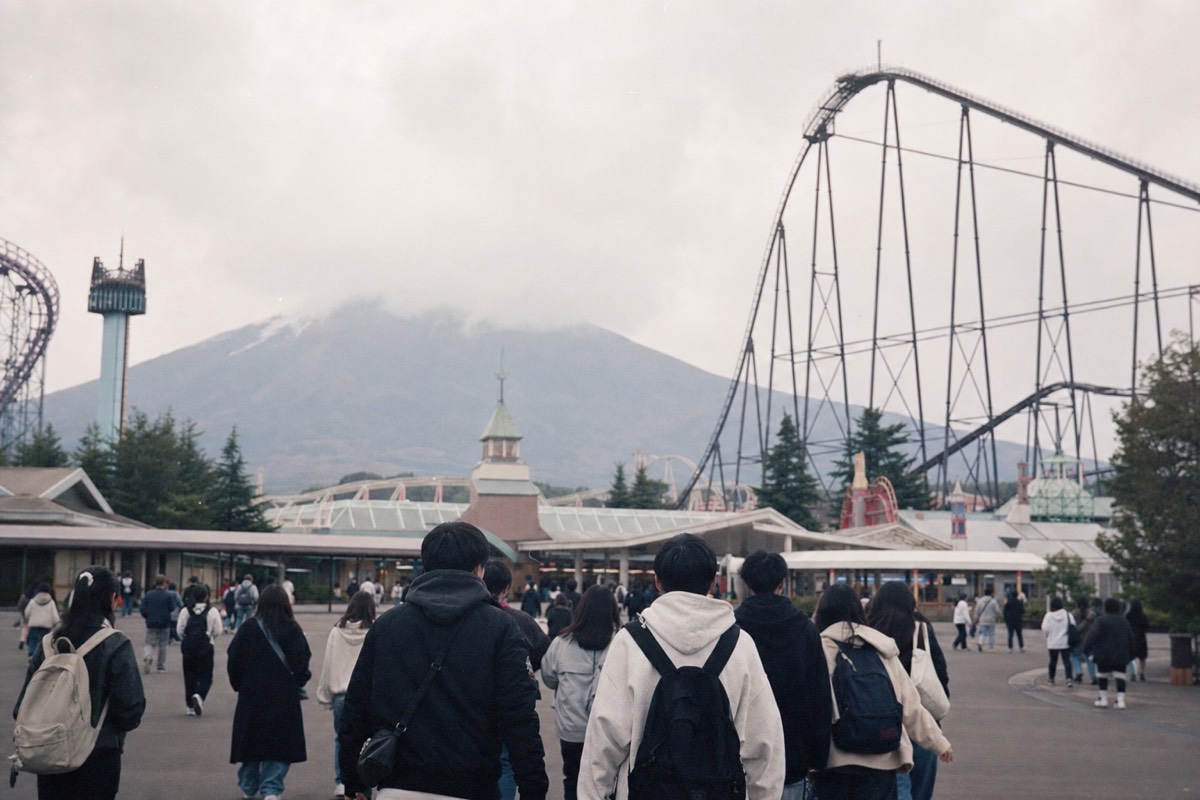
  • In summer, haze or clouds can sometimes block the mountain.
  • Fuji-Q Highland was strategically built with Mount Fuji views in mind.

Seeing Mount Fuji while enjoying world-class roller coasters is a unique and memorable part of a Fuji-Q Highland visit. On a clear day, the views are excellent.

You can book Fuji-Q Highland tickets and packages (with great Mount Fuji views on clear days) at Fuji-Q Highland Tickets.

The best time of day to visit Fuji-Q Highland is early morning, ideally arriving when the park opens (usually around 9:00 AM).

Why Morning is Best:

  • Much shorter wait times for the major roller coasters (Fujiyama, Eejanaika, Takabisha, Dodonpa) in the first 1–2 hours after opening.
  • Better views of Mount Fuji — clearer skies and softer morning light (especially from the Ferris Wheel and high rides).
  • Cooler temperatures (important in summer).
  • You can ride the most popular attractions multiple times before the crowds build up.
  • You’ll have more energy for the intense thrill rides.

Afternoon/Evening can be nice for:

  • Sunset views of Mount Fuji (if the weather is clear)
  • Nighttime illumination (on selected days)

Arrive as early as possible (aim for opening time) for the shortest lines, best Mount Fuji views, and the most enjoyable experience. This is especially important on weekends and holidays.

You can book Fuji-Q Highland tickets and packages (with early access options) at https://fujiqhighlandtickets.com/.

Yes, lunch and food are readily available inside Fuji-Q Highland.

What to Expect:

  • There are multiple restaurants, cafes, and food stalls throughout the park.
  • You can find a variety of Japanese and Western-style meals, including:
    • Ramen and udon
    • Curry rice
    • Burgers and hot dogs
    • Pizza and pasta
    • Takoyaki and other street snacks
    • Ice cream, crepes, and sweets
  • There are also character-themed restaurants and areas near major rides.
  • Most visitors eat lunch inside the park — it’s convenient and saves time.

Price Level: Typical theme park pricing (slightly more expensive than outside), but reasonable for Japan.

Food is easy to find and varied enough for most people. If you have specific dietary needs (vegetarian, halal, etc.), options are somewhat limited, so plan ahead or bring snacks.

You can book Fuji-Q Highland tickets and packages (including information on dining) at Fuji-Q Highland Tickets.

Here are the most effective strategies to minimize wait times:

Top Tips to Avoid Crowds:

  • Arrive Early — This is the single best way. Reach the park at or just after opening (usually 9:00 AM). The first 1–2 hours have dramatically shorter lines for the major roller coasters (Fujiyama, Eejanaika, Takabisha, Dodonpa).
  • Visit on Weekdays Tuesday to Thursday are generally the least crowded. Weekends and Japanese national holidays are much busier.
  • Buy Tickets Online in Advance Skip the ticket counter queue by purchasing your 1-Day Pass online before you go.
  • Prioritize Big Rides First Go straight to the most popular coasters right after opening, then do smaller rides later in the day when lines are shorter.
  • Choose Shoulder Seasons Late March–May and September–early October have fewer visitors than July–August.

Early morning entry on a weekday is by far the most effective method. If you follow this, you can usually ride all the major attractions with acceptable wait times (often under 30–60 minutes even on busy days).

You can book Fuji-Q Highland tickets (with early access and skip-the-line advantages where available) at https://fujiqhighlandtickets.com/.

Yes, one day is enough for most visitors to enjoy Fuji-Q Highland.

What You Can Do in One Day:

  • Ride all the major world-class roller coasters (Fujiyama, Eejanaika, Takabisha, Dodonpa, etc.).
  • Experience the Giant Ferris Wheel with views of Mount Fuji (on clear days).
  • Visit the smaller rides, haunted house, and other attractions.
  • Have time for lunch and some souvenir shopping.

If you arrive at opening time (usually 9:00 AM) and prioritize the big rides early, you can comfortably ride everything at least once, with some popular rides even twice.

When One Day Might Feel Short:

  • If you want to ride the most intense coasters multiple times.
  • If you visit on a very busy weekend or holiday.
  • If you prefer a more relaxed pace with long breaks.

One full day at Fuji-Q Highland is sufficient for the majority of visitors. It’s a compact park focused on thrill rides, so you can cover the highlights efficiently in a single day, especially with an early start.

You can book Fuji-Q Highland 1-Day Tickets and packages (including transportation from Tokyo) at Fuji-Q Highland Tickets.

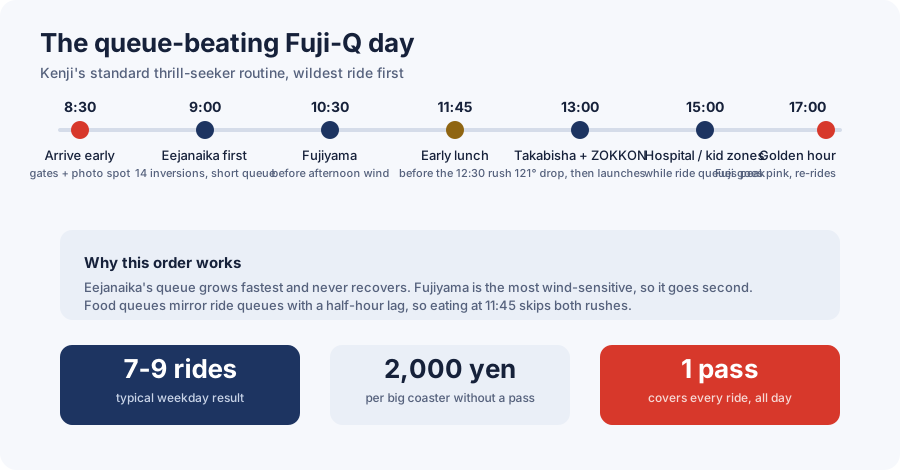
A Typical Visit Day at Fuji-Q Highland

  • 8:45 am — Arrive at the gate, Fujikyu Highland Station exit
  • 9:00 am — Park opens, head directly to Takabisha
  • 9:15 am — Takabisha, 121-degree drop, Guinness record holder
  • 10:00 am — Eejanaika, 14 inversions, 4D hypercoaster
  • 11:00 am — Fujiyama, the classic 79-meter coaster
  • 12:00 pm — Lunch at the park, Mt. Fuji visible behind the coasters
  • 1:00 pm — Super Scary Labyrinth of Fear, 90-minute haunted house
  • 3:00 pm — Thomas Land, families with young children branch here
  • 3:30 pm — Remaining coasters or re-rides with shorter afternoon queues
  • 5:00 pm — Shining Flower Ferris Wheel, Mt. Fuji panorama at height
  • 6:00 pm — Depart, Fujikyu Highland Station
Experience Japan’s Most Exciting Amusement Park with Epic Roller Coasters Fuji-Q Highland sits at the base of Mt. Fuji in Fujiyoshida, Yamanashi Prefecture, and the mountain behind the coasters is the visual fact that distinguishes this park from every other theme park in Japan. On a clear day, the mountain fills the sky behind the coasters, creating a backdrop that no amount of theming could replicate. The park's pricing model is also unusual: unlike most American and European parks, Fuji-Q Highland charges nothing to enter. The cost is in the ride tickets or the unlimited day pass, which means clients can arrive, assess the queues, and decide how to spend their budget based on actual conditions rather than committing before they arrive. Fuji-Q Highland Tickets provides the day pass options in advance because the gate price and the online price are different and peak season queues for the headline coasters genuinely reward early arrival with a pre-purchased ticket rather than time spent at the ticket window. Fuji-Q Highland has built its reputation on record-breaking roller coasters: Fujiyama, once the world's tallest at 79 meters; Takabisha, which holds the Guinness record for steepest drop at 121 degrees; and Eejanaika, a 4D hypercoaster with 14 inversions. The guides structure the coaster sequence by queue logic rather than preference: Takabisha first, because it draws the longest lines and the gap between opening time and the first hour is the narrowest window of manageable wait time the park produces. Eejanaika second, while the crowds are still distributed across the park. Fujiyama third, its queue moving faster than the others because its capacity per hour is higher. Despite the 2-plus hour long waits on busy days, the headline coasters are entirely worth it. Here is what we tell clients honestly before Fuji-Q Highland: the queues are the most significant variable in the day, and weekend visits produce wait times that meaningfully reduce the number of rides possible in a single day. A good option for those with limited time is to enter at a reduced rate and then buy tickets for individual rides, which saves time on slower days. Weekday visits in the shoulder season, from mid-October through November and March through early April, offer the combination of manageable queues, clear Mt. Fuji visibility, and comfortable temperatures. The peak summer period and Golden Week in early May produce the longest queues and the most crowded experience, and clients who visit on those days should arrive at opening and prioritize ruthlessly. Fuji-Q Highland takes horror seriously. The park's haunted attractions are not mild jump-scares — they are elaborate walk-through experiences that run 60 to 90 minutes and are genuinely unsettling. The haunted house experiences are among the most intense in Japan, and several are not recommended for children or anyone who does not enjoy being frightened in the dark. The Super Scary Labyrinth of Fear requires a separate ticket regardless of day pass type and the guides mention this before booking so clients can budget for it. It is also the attraction most consistently mentioned by repeat visitors as worth the additional cost and the additional time it takes out of the day. The Shining Flower Ferris Wheel in the late afternoon is the close that earns its position through contrast. After a day of maximum velocity and haunted corridors, the gondola rises slowly above the park and the view that opens up is the one that the coasters were previewing from different angles all day: Mt. Fuji filling the western sky above the park's infrastructure, the Fuji Five Lakes visible in the middle distance, and the specific quality of late afternoon light on the mountain that photographers drive hours to find. Fuji-Q Highland is a free-entry amusement park at the foot of Mount Fuji that offers many of the world's record-holding attractions and houses theme parks suitable for all ages, and the Ferris wheel is the moment where those two registers, the thrill-seekers and the families and the mountain that makes the location extraordinary regardless of either, are visible simultaneously.

How to Visit Fuji-Q Highland

mission of Fuji-Q Highland Tickets Fuji-Q Highland sits at the base of Mount Fuji in Yamanashi Prefecture, about 100 kilometres southwest of Tokyo, and combines two things that have no obvious business being in the same place: some of the most intense roller coasters on the planet and one of the world's most recognisable mountains visible from virtually every corner of the park. Takabisha holds the record for the world's steepest drop at 121 degrees, which means it goes past vertical. Eejanaika is a fourth-dimension coaster where the seats rotate independently of the track. Dodonpa launches from a standstill to 172 kilometres per hour in 1.8 seconds. Fujiyama was the tallest roller coaster in the world when it opened and still delivers a ride that uses all of that height. All of this with Mount Fuji in the background on a clear day. Here is what the team at Fuji-Q Highland Tickets tells first-timers when they plan their visit.
  1. Get to Fuji-Q Highland from Tokyo by direct highway bus or the Fuji Excursion limited express train. The highway buses from Shinjuku Expressway Bus Terminal run directly to the park entrance and take around one hour and forty minutes to two hours depending on traffic. The Fuji Excursion limited express train runs from Shinjuku directly to Fujisan Station, adjacent to the park, on a scenic route through the Fuji Five Lakes region and takes just under two hours. Both options are comfortable and reliable. The bus is marginally simpler for first-time visitors because it deposits you at the park gate; the train is more scenic and slightly more flexible on return timing. A direct highway bus or train ticket booked in advance for a 7 to 8 AM departure from Shinjuku places you at the park near opening time, which is the correct move.
  2. Buy tickets online before you travel, not at the gate. Online tickets for non-Japanese citizens are available through GetYourGuide and authorised resellers at a meaningful discount from the gate price, and purchasing in advance skips the ticket counter queue entirely. The 1-day passport gives unlimited access to all major rides. The Express Pass, available as an add-on at the time of booking, allows you to skip the standard queue at the four main coasters and is worth calculating against the expected wait times on your visit date: on a busy weekend in peak season the queue for Eejanaika can exceed 90 minutes, and the Express Pass for all four major coasters costs less than two hours of your day is worth. Weekday visits in shoulder season rarely require it.
  3. Arrive at opening time, which is typically 9 AM, and go straight to the main coasters. The first hour after opening is when Fuji-Q Highland operates at its most manageable: the queues for Fujiyama, Eejanaika, Takabisha, and Dodonpa are at their shortest, Mount Fuji is most likely to be visible before morning haze develops, and the temperature on summer days is still comfortable. By 11 AM on a weekend or public holiday the queues for the headline rides extend to 60 to 120 minutes each. The visitors who arrive at 9 AM can ride all four major coasters before noon. The visitors who arrive at 11 AM may manage two. The priority order for most first-time visitors who enjoy extreme rides is Takabisha first, then Eejanaika, then Dodonpa, then Fujiyama, since the first two have the longest queues as the day builds.
  4. Check the weather forecast for Mount Fuji visibility before you go. The mountain is visible from the park on clear days and genuinely adds a dimension to the experience: riding Fujiyama with a clear view of the peak is a visual combination that only this park in the world can provide. In summer from July through September, morning haze and afternoon cloud frequently obscure the mountain for most of the day, with the best visibility in the first hour after opening if it appears at all. Winter from December through February provides the clearest and most consistent views, with snow on the peak, sharp air, and the mountain visible throughout the day on many days. Autumn from October through November is the next best window for visibility. If the forecast shows cloud at altitude on your chosen day, the park remains excellent but the Fuji backdrop becomes a matter of luck.
  5. The Giant Ferris Wheel provides the best Mount Fuji view in the park. The ferris wheel rises to a height that places you level with the surrounding treeline and delivers a 360-degree panorama that includes Mount Fuji to the west, Lake Kawaguchiko below, and the park itself at your feet. The queue is almost never significant and the ride takes around ten minutes. On a clear day the view from the top is the most photographed single moment at Fuji-Q Highland. It is the natural first or last activity of the day: either a scene-setting perspective before the coasters or a calm conclusion to what may have been a physiologically eventful afternoon.
  6. Plan for one full day and pace the intense rides carefully. A single day from opening to the typical 5 to 6 PM closing covers all four headline coasters, the Giant Ferris Wheel, lunch, and several secondary attractions at a comfortable pace. The extreme rides are physically demanding in a specific way: the combination of high g-forces, sustained inversions, and the launch acceleration on Dodonpa leaves most visitors needing ten to fifteen minutes of recovery before the next major ride. Eating a large meal immediately before any of the four headline coasters is inadvisable. The park's food options include ramen, curry, burgers, and various Japanese snacks, and eating something light in the late morning before the lunch rush in the restaurants keeps the afternoon queue-free.
  7. Visit on a weekday in late March through May or September through early October for the best conditions. July and August bring peak summer crowds: the queues are at their longest, the heat on the exposed queue lines is significant, and Mount Fuji is frequently invisible through summer haze. Golden Week in late April through early May is extremely busy despite falling in the shoulder season. The ideal windows are the weekdays either side of Golden Week in late March through mid-April, the weekday period of May after Golden Week ends, and the September through early October window before autumn colours bring the next visitor peak. These months combine manageable crowds, comfortable temperatures, and reasonable Mount Fuji visibility.
  8. The one thing most first-timers get wrong: arriving at 11 AM on a Saturday in August, joining the queue for Eejanaika, waiting 100 minutes, riding it, and then calculating that they have time for one more major coaster before the park closes. Fuji-Q Highland is a park where the visit quality is almost entirely determined by arrival time and day of week. The four headline rides together take around twelve minutes of actual ride time. On a busy day the queuing to reach those twelve minutes can consume the entire visit. On a quiet weekday morning with a 9 AM arrival, all four can be ridden before noon with time to spare. Buy the ticket online, take the early bus from Shinjuku, walk through the gate at 9 AM, and go directly to Takabisha before anyone else is in the queue. The rest of the day follows naturally from that decision.

Location

Fuji-Q Highland sits in Fujiyoshida city in Yamanashi Prefecture, at the northern base of Mount Fuji roughly 100 km southwest of central Tokyo; most visitors arrive by direct highway bus from Shinjuku Expressway Bus Terminal in about 1 hour 40 minutes, or by train on the JR Chuo Line to Otsuki then the Fuji Kyuko Line to Fuji-Q Highland Station, with the nearest major airports being Haneda (HND) about 130 km northeast and Narita (NRT) about 180 km to the east. The park sits at around 850 metres elevation on Fuji's lower slopes, which means the mountain itself dominates the northern skyline on clear days — visible from the coasters, the Ferris wheel, and large sections of the park floor. Yamanashi's climate brings cold, clear winters when Fuji's snow cap is at its most dramatic, hot humid summers, and a brief but spectacular autumn season, with visibility and weather conditions varying enough season to season that the experience of visiting shifts considerably depending on when you go. Take a look at the map below to see exactly where the park sits at the base of the mountain and its connections to Tokyo and the Fuji Five Lakes region.  

Guarantee Your Spot with Fuji-Q Highland Tickets

team of Fuji-Q Highland Tickets Fuji-Q Highland sits at the base of Mount Fuji two hours from Tokyo and packs four of the world's most extreme roller coasters — Fujiyama, Eejanaika, Takabisha, and Dodonpa — into a single compact park that draws enormous crowds on weekends, Japanese national holidays, and the Golden Week and Obon peaks. The 1-day pass for non-Japanese residents purchased online is consistently cheaper than the gate price by 10 to 20 percent. The express pass, which skips the standard queues on the four major coasters, sells out on busy days before many visitors arrive at the park. The day trip packages from Tokyo combining bus transport and park entry sell out their peak-season coach seats. The Fuji-Q Highland and Mount Fuji combination tours have their own capacity limits. Book before your Japan itinerary puts you in Fujiyoshida on a holiday weekend with no express pass and a two-hour queue for Takabisha. The 9am opener who arrives with a pre-purchased ticket and an express pass for the first ride of the day is the person who rides all four major coasters before noon. What you lock in when you book in advance:
  • The discounted ticket price before the gate rate applies. Online tickets for non-Japanese visitors are consistently 10 to 20 percent cheaper than purchasing at the park entrance. The gate is the most expensive way to enter and requires standing in the ticket line on a day when you want to be at the Fujiyama queue before it builds. Booking through Fuji-Q Highland Tickets confirms the discounted entry price, delivers the ticket to your phone before you leave Tokyo, and eliminates the entrance queue entirely on arrival. On a busy Saturday in late March when the cherry blossom visitors are out and the park is at capacity, the gate wait alone can cost forty minutes of ride time.
  • An express pass before it sells out on high-demand days. The express passes for Fujiyama, Eejanaika, Takabisha, and Dodonpa allow direct access to abbreviated queues on the four rides that otherwise accumulate the longest waits. On Golden Week days and summer Saturdays, express passes sell out — sometimes online before the park opens, sometimes at the in-park kiosks by mid-morning. The visitor who arrives at 10am on a crowded day without an express pass faces standard queues of 60 to 120 minutes per major ride. That visitor will not ride all four major coasters in a single day. The express pass booked in advance through Fuji-Q Highland Tickets is the difference between a full day and an incomplete one.
  • A Tokyo day trip coach seat before the peak departure fills. The highway bus packages from Shinjuku combining direct coach transport with park entry run on a fixed number of seats per departure. On the high-demand days in spring and summer when every seat on the highway bus fills from online bookings before the departure date, the walk-up attempt at Shinjuku Expressway Bus Terminal finds no availability. The visitor who needs to be at the park for opening at 9am — to hit the big coasters before queues build — needs the 7am bus confirmed before the morning of travel.
  • The Mount Fuji combination tour on the specific day your Japan schedule allows. The day tour from Tokyo combining Fuji-Q Highland entry with a Mount Fuji visit to the 5th Station — two of the most visited destinations in the Fuji Five Lakes region in a single confirmed day — requires a private vehicle, a confirmed guide, and park tickets all aligned on the same date. On clear-sky days in October and November when Mount Fuji is snow-capped and unobscured, the combination tours fill from advance bookings. The cloud-free window that puts both the coasters and the mountain in the same day is not an improvised arrangement.
  • Early arrival protection on the days that matter most. The park's own guidance is unambiguous: arrive at opening time to minimize queues on the four major coasters. The visitor who has pre-purchased tickets goes directly from the bus or train to the turnstile. The visitor buying at the gate joins the ticket queue before the ride queue. On a busy spring Saturday, that difference can be 20 to 30 minutes — which at Fuji-Q's busiest, translates directly into one fewer major coaster before the midday crowds peak. Booking through Fuji-Q Highland Tickets makes the opening-time arrival a clean, frictionless entry.
Mount Fuji will be visible from the Ferris Wheel on any clear morning. Takabisha's 121-degree drop and the express pass that gets you on it before the queue doubles — those are available to the visitors who booked before they caught the bus from Shinjuku.

Videos from Fuji-Q Highland Tickets

Powered by GetYourGuide